

In laboratories across the world, fluid handling plays a crucial role in ensuring accurate and efficient results. The variety of pumps available on the market allows researchers and engineers to choose the ideal one for their specific needs. Among these options, peristaltic pumps have gained particular prominence in laboratory settings due to their unique advantages. In this blog article, we will explore what sets lab peristaltic pumps apart from other fluid pumps.
Before exploring the specific advantages of peristaltic pumps, it is essential to understand the basic types of fluid pumps commonly used in laboratory environments. Broadly, fluid pumps are designed to move liquids or gases from one location to another. Depending on the mechanism of action, fluid pumps can be classified into various categories, including:
1. Centrifugal Pumps: These pumps use a rotating impeller to move fluid. They are commonly used for high-flow, low-pressure applications.
2. Diaphragm Pumps: These pumps use a diaphragm that moves back and forth to displace fluid. Diaphragm pumps are often used for metering and precision fluid handling.
3. Gear Pumps: These pumps use interlocking gears to move fluid, often used in applications requiring high viscosity fluids.
4. Syringe Pumps: These pumps use a syringe to control fluid flow precisely, ideal for low flow rate applications and precise dosing.
5. Rotary Lobe Pumps: These pumps use two or more rotors to trap and move fluid, suitable for viscous fluids.
6. Piston Pumps: These pumps use a piston to displace fluid, offering precise flow control and high-pressure capabilities.
7. Peristaltic Pumps: Unlike the above pumps, peristaltic pumps operate based on a unique method that mimics the action of muscles moving food through the digestive system.
A peristaltic pump operates through a mechanism that involves a rotor and rollers. The pump tube (or hose) is fixed within the pump housing, and as the rollers turn, they squeeze the tube, creating a peristaltic motion that pushes the liquid forward. This ensures that the fluid is enclosed within the tube and comes into minimal contact with the pump’s internal components.
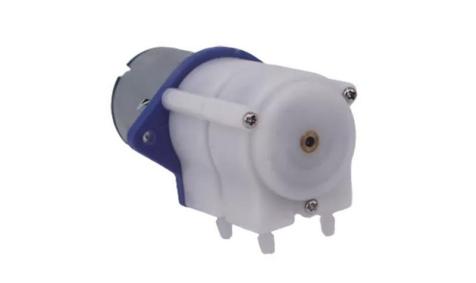
Peristalsis is a type of involuntary muscle movement that occurs in your digestive system. It begins in your throat when you swallow, and continues to propel food and fluids throughout your gastrointestinal tract. You can think of your GI tract as a series of hollow organs joined together to form one long passageway. That passageway is lined with muscles and nerves. The efficiency of this biological mechanism has inspired the design of engineering tools like the micro peristaltic pump, which moves tiny, precise volumes of fluid in medical and laboratory devices. For compact laboratory instruments, diagnostic equipment, and OEM fluid-handling systems, a china small peristaltic pump can also provide a practical solution when space-saving design, clean fluid transfer, and stable dosing performance are required.
This action offers several advantages:
Non-contaminating pumping: Since the fluid only contacts the inner surface of the tubing, peristaltic pumps are ideal for handling sensitive liquids, such as chemicals, pharmaceuticals, and biological fluids.
No leakage: The sealing nature of the tube ensures there is no risk of leakage or cross-contamination.
Precise flow control: Peristaltic pumps allow for fine-tuned control of the flow rate, which is crucial for many laboratory processes.
1. Gentle and Contamination-Free Handling: One of the biggest advantages of peristaltic pumps is their ability to handle fluids gently. Since the fluid never comes into contact with the pump’s mechanical components, there is little risk of contamination, which is a critical concern when dealing with reagents, samples, or sterile fluids in laboratories. This sets peristaltic pumps apart from other pumps, such as centrifugal or diaphragm pumps, which often expose the fluid to additional parts that can potentially contaminate the flow.
2. Self-Priming Ability: Peristaltic pumps are self-priming, meaning they can start pumping fluid without the need for any additional external pressure or vacuum to initiate the flow. In contrast, pumps like diaphragm or gear pumps may need manual priming to function properly, especially when pumping viscous fluids or when the pump has run dry.
3. Handling Viscous Fluids: Peristaltic pumps excel in applications where high-viscosity fluids need to be transferred. In comparison, centrifugal pumps struggle with handling thicker liquids or slurries because their mechanism relies on the centrifugal force of a spinning impeller. Similarly, gear pumps might not be able to handle highly viscous fluids with the same ease as peristaltic pumps.
4. No Risk of Backflow: Due to the peristaltic action, the design of the pump makes it virtually impossible for the fluid to flow backward. Other pumps, like diaphragm pumps, require additional check valves to prevent backflow, and centrifugal pumps, in particular, can be vulnerable to reverse flow in certain conditions.
5. Flow Rate Control and Accuracy: The ability to precisely control the flow rate is an essential factor in laboratory work, and peristaltic pumps provide a high degree of accuracy. With the simple adjustment of the pump speed, users can achieve precise flow rates. This is often more complicated with other pumps, such as centrifugal pumps, where the flow rate varies with changes in pressure or system resistance.
6. Easy Maintenance: One of the major selling points of peristaltic pumps is that they require minimal maintenance. The tube, which is the only part in contact with the fluid, is easy to replace and can be done without requiring disassembly of the entire pump. In comparison, diaphragm or gear pumps often involve more intricate cleaning and maintenance procedures.
Lab peristaltic pumps are distinct in their functionality and offer a range of advantages over traditional fluid pumps. They provide contamination-free handling, precise flow control, and ease of maintenance, making them particularly well-suited for sensitive and high-precision applications. Microlit’s diverse range of peristaltic pumps caters to the varied needs of laboratory professionals, offering high performance, durability, and flexibility for fluid handling tasks.
.webp "How to Choose the Right Small Solenoid Water Valve for Compact Fluid Control Systems")