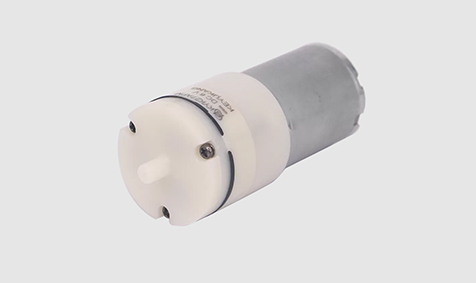
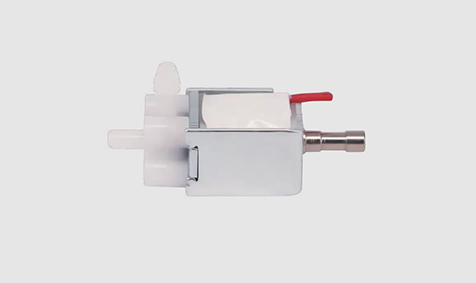
Micro solenoid pumps are compact, fast, and precise — but they are sensitive to how they are driven. If an electromagnetic pump is operated outside its intended duty cycle, coil temperature rises, valves wear faster, and performance drifts long before a hard failure occurs. This guide explains what duty cycle really means for micro electromagnetic pumps, how to design for longer life, and what to confirm with electromagnetic pump manufacturers before scaling production.
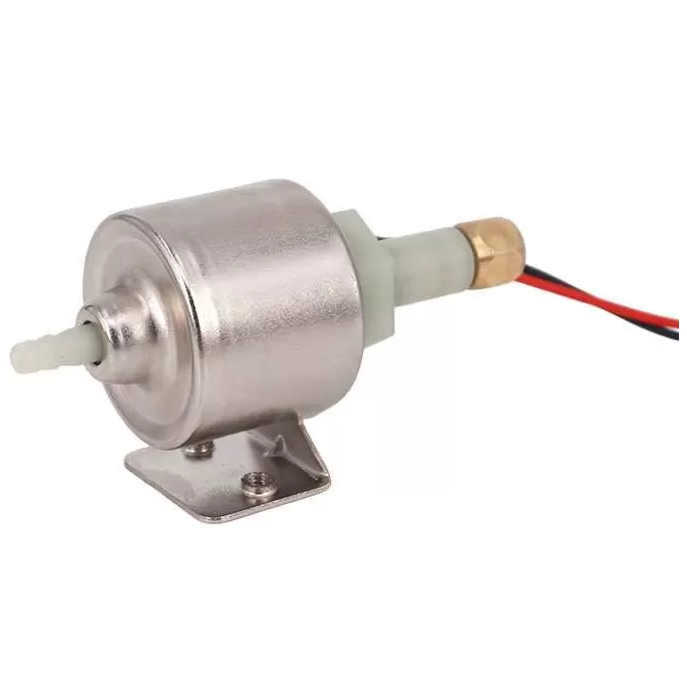
Duty cycle for an electromagnetic pump is the ratio of energized (on) time to total cycle time, expressed as a percentage. For a solenoid-driven pump that pulses at 1 Hz with a 50% duty cycle, the coil is energized for 500 ms and de-energized for 500 ms in each second.
| Operating Mode | Duty Cycle | Practical Meaning |
|---|---|---|
| Continuous operation | 100% | Coil always energized; maximum thermal load |
| Standard intermittent | 50% | Equal on and off time; moderate thermal load |
| Low-frequency dosing | 10–20% | Long off periods; coil cools between pulses |
| Burst dosing | Short high-frequency bursts with long idle | Complex thermal profile; worst case is the burst duration |
Every time the coil is energized, current flows through the winding resistance and generates heat (I²R heating). This heat accumulates in the coil and surrounding components. The coil winding insulation is rated to a maximum temperature — typically 130°C (Class B) or 155°C (Class F) — and sustained operation above this temperature causes irreversible insulation degradation.
| Thermal Effect | Consequence |
|---|---|
| Insulation aging | Dielectric strength decreases; eventually leads to short circuit |
| Force reduction | Magnetic permeability decreases with temperature; plunger stroke force reduces |
| Dimensional change | Thermal expansion of the bobbin and housing affects plunger gap |
| Valve seat degradation | Elevated temperature at the valve zone accelerates elastomer aging |
The same pump model can have dramatically different service lives depending on the duty cycle. A pump rated for 10,000 hours at 30% duty cycle may deliver only 2,000–3,000 hours at continuous operation. Always request the manufacturer's lifetime data at your specific duty cycle — not just at the rated intermittent condition.
An electromagnetic pump generates flow through a sequence that repeats with every electrical pulse:
| Step | What Happens | Physical Component |
|---|---|---|
| Coil energizes | Magnetic field pulls the plunger toward the core | Coil winding + iron core + plunger |
| Plunger moves | Fluid is displaced from the pump chamber | Diaphragm or direct plunger action |
| Outlet valve opens | Pressure differential opens the outlet check valve; fluid exits | Check valve disc + seat |
| Coil de-energizes | Return spring pushes plunger back; inlet valve opens | Return spring + inlet check valve |
| Component | Wear Mechanism | Effect on Performance |
|---|---|---|
| Check valve disc and seat | Impact from each cycle; erosion from fluid | Valve leakage; reduced effective flow; loss of pressure hold |
| Diaphragm / seal | Flex fatigue from cycling; chemical degradation | Reduced stroke volume; eventual leak |
| Plunger guide | Friction from lateral loads; abrasion | Increased friction; reduced stroke |
| Coil insulation | Thermal aging from sustained duty cycle | Potential electrical failure; reduced inductance |
High duty cycle increases three simultaneous stress factors: thermal stress on the coil insulation, total cycle count on the valves and diaphragm, and mechanical impact fatigue on the plunger-to-core contact. Reducing duty cycle is the single most effective intervention for extending pump life when there is flexibility in the application's operating profile.
Thermal management is not limited to the pump specification — the system engineer has significant influence over the pump's thermal environment.
| Lever | How It Reduces Temperature Rise | Practical Implementation |
|---|---|---|
| Reduce power per stroke | Lower current at the same magnetic work | Optimize driving voltage; use current-controlled drive |
| Optimized driving waveform | PWM or half-wave rectified drive reduces RMS current | Electronic drive circuit; confirm pump accepts PWM |
| Adequate off time | Allows coil to cool between pulses | Enforce minimum off time in the control algorithm |
| Thermal mass of mounting | Metal mounting bracket conducts heat away from the coil | Specify aluminum mounting bracket; maximize contact area |
| Forced airflow | Convection cooling removes heat faster | Position pump near fan; avoid dead-air enclosures |
| Separation from other heat sources | Prevents additive thermal environment | Review thermal layout of the entire assembly |
Temperature rise testing should always be conducted at the worst-case duty cycle and worst-case ambient temperature simultaneously. A pump that runs at 40°C ambient in a test lab may see 55°C ambient inside a product enclosure in summer — and the cumulative effect on coil temperature is significant.
| Test Condition | Why It Is Required |
|---|---|
| Maximum rated duty cycle | Confirms steady-state coil temperature is within the insulation class rating |
| Maximum ambient temperature | Confirms adequate margin remains even in hot environments |
| Worst-case product enclosure | Confirms no thermal pocket around the pump in the final installation |
| Extended duration | Confirms steady-state is reached and no progressive overheating occurs |
The fluid being pumped is as important to pump longevity as the electrical operating conditions.
| Fluid Characteristic | Risk | Protection |
|---|---|---|
| Particulate contamination | Particles lodge in check valve seat; cause leakage; abrade plunger guide | Inline filter upstream of the pump; 50–100 micron is typical minimum |
| High viscosity | Increases hydraulic resistance; reduces effective flow; increases plunger load | Confirm pump is rated for the fluid viscosity at the operating temperature |
| Chemical aggressiveness | Degrades diaphragm, valve discs, or body material | Confirm material compatibility for every wetted component at operating concentration and temperature |
| Air entrainment | Causes cavitation and hydraulic shock; unpredictable valve cycling | Ensure pump inlet is fully primed; design to prevent air entry |
Many micro electromagnetic pumps are not rated for dry-run operation — the fluid provides lubrication to the valve seat and controls the temperature at the contact surfaces. Running dry even briefly can cause:
Valve seat damage from unlubricated impact
Elevated localized temperature at the pump chamber
Permanent reduction in flow and pressure performance
Build dry-run protection into the application design:
Confirm fluid presence before enabling pump power (float switch, capacitive sensor, or flow confirmation sensor)
Design the inlet plumbing to prevent air pockets during priming
Define a startup sequence in the firmware that confirms flow before entering normal operation
| Parameter | What to Define | Why It Matters |
|---|---|---|
| Flow rate | Target in mL/min or mL/stroke at operating pressure | Confirms pump displacement matches system requirement |
| Operating pressure | Back-pressure the pump must overcome | Determines if the pump has adequate force margin |
| Duty cycle profile | On-time, off-time, pulse frequency, and burst patterns | Primary input for lifetime prediction and thermal assessment |
| Operating frequency | Pulses per second or per minute | Must match the pump's rated frequency range |
| Fluid type and viscosity | Complete identification at operating temperature | Required for material compatibility and performance prediction |
| Operating temperature | Ambient temperature range in the installed environment | Required for thermal derating and coil insulation class selection |
| Power supply | Voltage and current availability | Defines the driving conditions and confirms compatibility |
| Documentation | Why It Is Required |
|---|---|
| Performance curve | Flow vs. pressure at the rated drive conditions; confirms the pump operates in the correct zone |
| Lifetime data at your duty cycle | Predicted valve life and total cycle count; confirms the pump is appropriate for the application |
| Materials list for wetted components | Required for chemical compatibility assessment |
| Thermal characterization data | Coil temperature rise at rated duty cycle and at maximum ambient |
| QC and traceability practices | 100% flow test; batch traceability; consistent COA format |
| Test | Duration | What It Measures |
|---|---|---|
| Endurance cycling at maximum duty cycle | Full rated lifetime hours | Valve condition at end of life; flow drift over time; any change in noise |
| Valve sealing check at intervals | Every 20–25% of rated life | Leak-by rate across the check valves; early indicator of seat wear |
| Coil temperature measurement | Continuous during endurance | Confirms thermal design is adequate in the actual installation |
| Flow drift monitoring | At defined interval measurements | Quantifies how much the pump's output changes over its service life |
| Noise check | Beginning and end of endurance | Detects increasing mechanical wear from audio signature change |
A micro solenoid electromagnetic pump can deliver long service life — but only when duty cycle, thermal design, and fluid conditions are engineered together from the start. The pump specification sets the ceiling; the application design determines whether the pump reaches it. Define your real operating profile before selecting a model, validate coil temperature rise at worst-case conditions in the actual installation, and choose mini pump manufacturers who can provide performance curves, cycle-specific lifetime data, and material transparency.
Q1: What is duty cycle for an electromagnetic pump and why does it matter?
Duty cycle is the ratio of energized time to total cycle time, expressed as a percentage. A 50% duty cycle means the coil is powered for half of each cycle period. It matters because each energized period generates heat in the coil winding. Higher duty cycle means less cooling time between pulses, leading to higher steady-state coil temperature — which accelerates insulation aging and reduces the pump's service life.
Q2: Why does a high duty cycle reduce micro solenoid pump service life?
Two simultaneous mechanisms are at work. First, higher duty cycle raises the average coil temperature toward and eventually above the insulation class rating, causing irreversible degradation of the winding insulation. Second, higher duty cycle means more valve actuation cycles per unit time, accumulating mechanical wear on the check valve discs and seats more quickly. Both effects shorten the time to performance degradation and eventual failure.
Q3: Can I run a micro electromagnetic pump continuously?
It depends entirely on the specific model and its thermal design. Some electromagnetic pump models are designed for continuous duty with adequate coil sizing and thermal management. Many compact micro solenoid pumps are designed for intermittent duty at a rated maximum duty cycle. Always confirm with the manufacturer whether continuous operation is within the rated envelope, and request coil temperature rise data at 100% duty cycle before assuming continuous operation is safe.
Q4: What steps beyond lowering the duty cycle can extend electromagnetic pump life?
Use an optimized driving waveform such as PWM or half-wave rectification to reduce RMS current while maintaining adequate stroke force. Mount the pump on a conductive metal bracket to improve heat dissipation. Ensure adequate airflow around the pump in the product enclosure. Install an upstream inline filter to remove particles that damage valve seats. Prevent dry-run conditions that cause unlubricated valve seat impact. Validate and maintain operation within the pump's rated pressure and temperature limits.
Q5: What specifications should I provide to electromagnetic pump manufacturers for accurate selection and lifetime estimation?
Provide the target flow rate in mL/min at the operating back-pressure, the maximum back-pressure the pump must overcome, the complete duty cycle profile (on-time, off-time, pulse frequency, and any burst patterns), the fluid identification including viscosity at operating temperature, the ambient temperature range in the installed environment, the power supply voltage and available current, and the required service life in total operating hours or cycles.