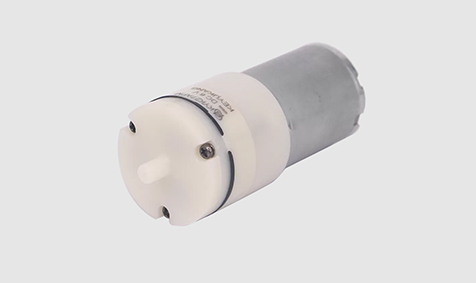
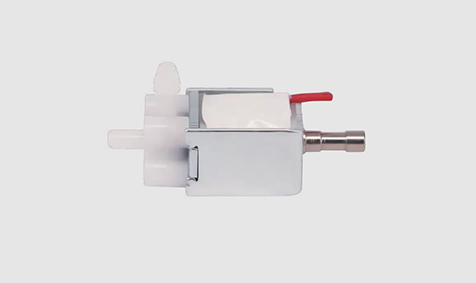
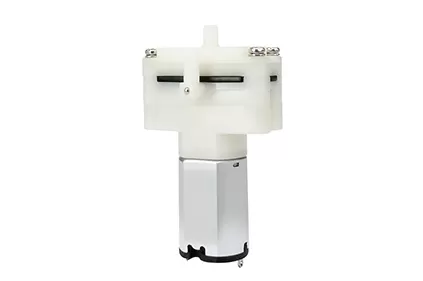
In 2026, consumers expect a portable breast pump to be more than convenient — it must be safe, hygienic, and built with materials that will not introduce odors, leachable compounds, or contamination risk. While breast pumps are not food storage devices, they share many of the same material and cleanliness expectations as systems that use a vacuum pump for food storage: sealed airflow paths, safe plastics and elastomers, and reliable performance over repeated cleaning cycles. This guide explains how to choose BPA-free and food-grade components and what to verify when designing or sourcing micro-pump driven products.
| Term | What It Covers | What It Does Not Automatically Cover |
|---|---|---|
| BPA-free | The plastic does not contain bisphenol A | Other potentially problematic plasticizers or additives |
| Food-grade | Broadly safe for contact with food-adjacent applications; migration limits respected | Does not specify cleaning durability or odor performance |
| Food-contact compliant | Meets a defined regulatory standard (FDA 21 CFR, EU 10/2011, or equivalent) | Compliance is only valid for the specified conditions of use |
| Medical-grade | Materials meeting more stringent biocompatibility standards (ISO 10993) | A higher bar than food-grade; applicable to regulated medical devices |
For a portable breast pump, the correct standard depends on the regulatory pathway in the target market. In the US, products may be regulated as medical devices; in some markets, they fall under consumer product rules. Either way, material safety expectations from parents are at the medical device level regardless of regulatory classification.
Both portable breast pumps and vacuum pump for food storage applications share a critical characteristic: warm, moist media contacts the materials repeatedly, with cleaning and sterilization cycles in between. This combination accelerates:
Odor absorption into porous or degraded polymer surfaces
Extractables leaching from plastics under thermal stress
Surface cracking that creates hard-to-clean harboring points
Silicone picking up odors from cleaning agents if the grade is incorrect
Not every component in a portable breast pump contacts milk. The design must clearly separate milk-contact components from air-path components — and the material requirements are different for each zone.
| Component Category | Contact Type | Material Requirement |
|---|---|---|
| Breast flange | Direct skin and milk contact | BPA-free PC or PP; food-contact grade |
| Collection bottle/cup | Direct milk contact | BPA-free PPSU, Tritan, or PP; food-contact compliant |
| Duckbill valve or check valve | Direct milk contact | Medical or food-grade silicone |
| Diaphragm (if in milk path) | Milk contact | Food or medical-grade silicone |
| Tubing from flange to pump | Air path — should be closed system | No milk contact; moisture-resistant materials |
| Pump motor and housing | Air path only | Standard engineering plastics acceptable |
| Pump diaphragm | Air path only — sealed from milk | No food-contact requirement; focus on durability |
Polycarbonate with BPA: legacy issue — now largely avoided but must still be confirmed in sourcing
Standard silicone vs. food-grade silicone: not all silicone is equal; food-grade specification must be confirmed with the supplier
Stress cracking in rigid parts: repeated sterilization cycles cause polypropylene or PC to develop micro-cracks that harbor contamination
Silicone odor absorption: food-grade silicone can absorb strong odors from cleaning agents, particularly bleach-based products
The design of the pump system itself determines whether hygiene can be maintained in daily use. A technically safe material specification is undermined by a design that allows milk to travel toward the pump or creates crevices that cannot be cleaned.
| Design Feature | Purpose | Risk If Absent |
|---|---|---|
| Closed-system design | Physical barrier (diaphragm) prevents milk or moisture from reaching the pump motor | Milk contamination of pump; mold growth in non-cleanable pump components |
| Anti-backflow check valve | Prevents milk from traveling backward along the collection path | Contamination of tubing and diaphragm; hygiene compromise |
| Smooth internal surfaces | No crevices for milk residue to accumulate | Biofilm formation; persistent odor; mold |
| Minimal assembly points | Fewer seals and joints means fewer potential leak and contamination pathways | Disassembly and reassembly errors creating hygiene gaps |
Define the cleaning method the product must support and confirm all materials are compatible:
| Cleaning Method | Temperature | Material Compatibility Check |
|---|---|---|
| Handwash (mild soap) | Ambient | All materials acceptable if food-grade |
| Dishwasher (top rack) | Up to 65°C | Confirm PPSU, Tritan, or equivalent; standard PP may warp |
| Boiling sterilization | 100°C | Limited materials survive repeated cycles — PPSU and silicone preferred |
| Steam sterilizer (microwave or electric) | Up to 120°C | Only high-temperature rated materials — test for dimensional stability |
| UV sterilization | Ambient | Material-neutral — UV stability of clear components should be confirmed |
Vacuum pump for food storage applications operate on the same fundamental principle as portable breast pump systems: a micro pump creates negative pressure through a sealed airflow path, and the integrity of that sealing determines both performance and hygiene. The learnings from food storage pump design apply directly.
| Design Principle | Food Storage Application | Breast Pump Application |
|---|---|---|
| Sealed airflow path | Prevents atmospheric contamination of vacuum-sealed food container | Prevents milk from reaching non-cleanable pump components |
| Moisture-resistant materials | Pump must tolerate condensation from food containers without degradation | Pump must tolerate residual moisture from cleaned components |
| Stable check valve performance | Maintains vacuum seal reliably over hundreds of cycles | Maintains correct suction pattern and prevents backflow over years of use |
| Odor-neutral construction | Pump materials must not absorb or transmit food odors | Pump air-path materials must not transmit plastic or manufacturing odors toward the milk |
| Performance Factor | What to Specify | Why It Matters |
|---|---|---|
| Vacuum level | Maximum depression in kPa or mmHg | Must match the physiological suction range for comfortable and effective expression |
| Flow rate consistency | Stable across battery state and ambient temperature | Inconsistent vacuum level reduces effectiveness and comfort |
| Noise level | dB(A) at operating distance | Portable pumps are used in quiet environments; noise is a primary user complaint |
| Cycle life | Number of operation cycles before performance degradation | Daily use over 12+ months requires significant tested durability |
| Leak rate | Vacuum hold performance with typical load | Confirms sealing integrity of the complete pump assembly |
| Document | What It Confirms |
|---|---|
| Material declaration for each plastic component | Resin identity; BPA-free confirmation; food-contact compliance standard referenced |
| Silicone grade declaration | Food-grade or medical-grade specification for each silicone part |
| Food-contact compliance statement | FDA 21 CFR or EU 10/2011 compliance for milk-contact components |
| Micro pump performance data | Vacuum level, flow rate, noise, and cycle life test data |
| Sterilization compatibility testing | Dimensional and material stability after defined number of sterilization cycles |
| Test | Method | Pass Criteria |
|---|---|---|
| Odor test | Sensory evaluation after cleaning cycles | No detectable plastic or chemical odor after defined number of wash cycles |
| Sterilization aging | Defined number of steam or boiling cycles; measure dimensional change and surface condition | Within dimensional tolerance; no cracking, warping, or surface degradation |
| Vacuum performance stability | Measure vacuum level and flow rate before and after aging | Within specified performance range; no degradation |
| Leak test | Hold vacuum at rated level for defined period | No measurable pressure loss |
| Backflow test | Simulate reverse pressure event; confirm check valve integrity | No fluid passage past valve in reverse direction |
Incoming material QC: confirm each batch of silicone and plastic components arrives with documentation before use in assembly
Assembly cleanliness controls: assembly environment controls to prevent particulate contamination of milk-contact parts
Final functional test: vacuum level and cycle verification on every finished unit or on a defined AQL sample per lot
Traceability: lot number on all components; finished product traceable to specific material batches
For a portable breast pump, safety is a system property — material selection, sealing design, backflow prevention, and pump reliability all work together to protect hygiene and user trust. By applying the same sealed, odor-neutral, and durability-tested mindset used in vacuum pump for food storage systems, brands can build products that perform consistently through daily use cycles and repeated cleaning without compromising the safety of the milk they handle.
Q1: Which parts of a portable breast pump must be BPA-free?
All components that contact milk must be BPA-free — this includes the breast flange, collection cup or bottle, duckbill valves, and any silicone membranes or diaphragms in the milk path. Components in the air path that are sealed from milk contact have different material requirements focused on pump performance and durability rather than food safety.
Q2: What is the difference between BPA-free and food-grade?
BPA-free means the specific compound bisphenol A is absent from the material. Food-grade refers to a broader set of safety requirements — including migration limits for all potential extractables, odor neutrality, and compliance with an applicable food-contact standard such as FDA 21 CFR or EU 10/2011. A material can be BPA-free without meeting food-grade standards.
Q3: Why does pump design affect breast pump hygiene?
The design determines whether milk or moisture can travel from the collection path toward the pump motor — a component that cannot be cleaned. A closed-system design with a sealed diaphragm barrier and anti-backflow check valves physically prevents this. Without these features, contamination can reach non-cleanable internal components and create mold or hygiene risks that users cannot detect or address.
Q4: How is a vacuum pump for food storage relevant to breast pump design?
Both systems rely on a micro pump creating negative pressure through a sealed, clean airflow path. The same principles — sealed paths, moisture-resistant materials, odor-neutral construction, and check-valve reliability — that make food storage pumps hygienic and durable apply directly to portable breast pump pump module design.
Q5: What tests should manufacturers run for safety-focused breast pump components?
Essential validation includes odor testing after multiple cleaning cycles, sterilization aging tests measuring dimensional and surface stability, vacuum performance testing before and after aging, leak rate testing at rated vacuum, and backflow testing to confirm check valve integrity. Material compliance documentation should accompany all of these functional validations.