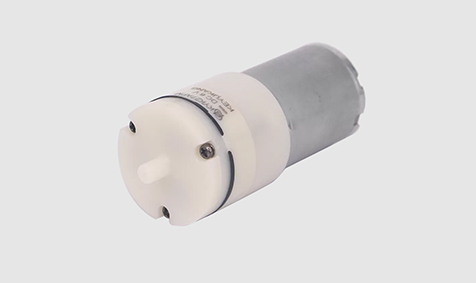
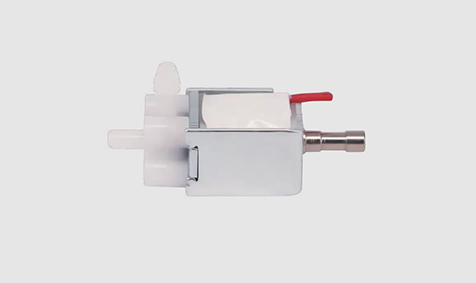
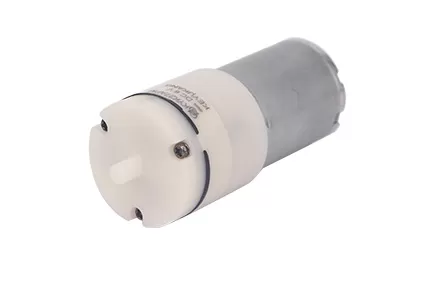
Precision fluid systems — medical devices, analyzers, beverage equipment, and smart appliances — fail quickly when flow is unstable, materials are incompatible, or maintenance is underestimated. Choosing a micro diaphragm pump often delivers compact pressure capability and strong reliability, while peristaltic pumps excel at clean fluid isolation and simple tubing replacement. This guide compares both options with a practical engineering lens and highlights when a micro diaphragm water pump is the best fit for your application.
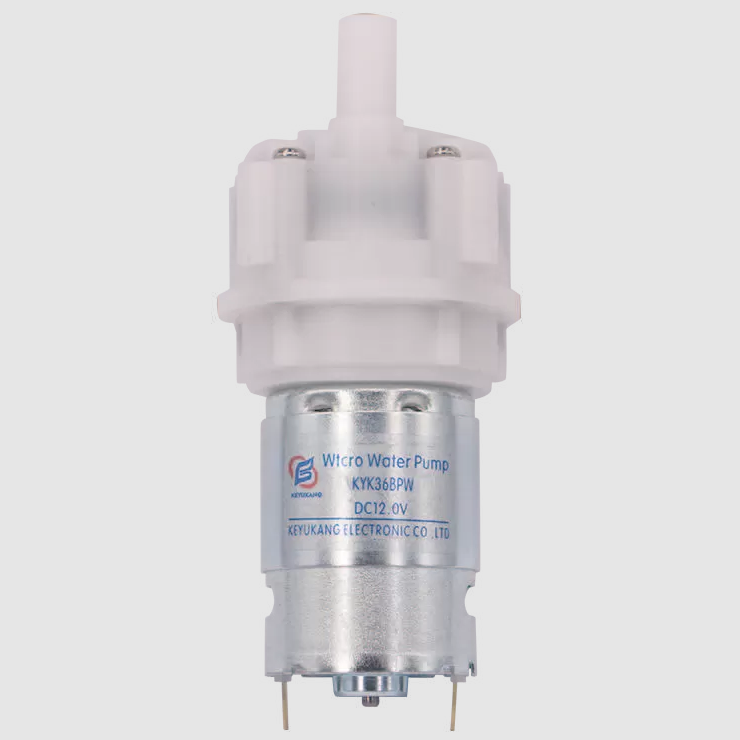
| Pump Type | Working Principle | Primary Strength | Primary Limitation |
|---|---|---|---|
| Micro diaphragm pump | A reciprocating diaphragm powered by a motor creates alternating chamber volume changes; check valves control flow direction | High pressure for size; good self-priming; handles intermittent operation | Fluid contacts wetted chamber surfaces; pulsating flow |
| Peristaltic pump | Rollers progressively compress a flexible tube, pushing fluid forward in front of each roller | Fluid contacts only the tubing; easy contamination control | Lower pressure capability; tubing wear affects accuracy over time |
The operating principle is not a detail — it defines everything that follows: what materials the fluid contacts, how smooth the flow is, what maintenance looks like, and how much pressure the system can generate. Choosing between a micro diaphragm water pump and a peristaltic pump is therefore a system-level decision, not a component-level one.
A quick first filter: if fluid isolation from all pump wetted surfaces is a non-negotiable requirement (sterile, highly reactive, or cross-contamination-sensitive applications), the peristaltic approach is the natural starting point. If pressure performance and compact integration are the primary drivers, the diaphragm approach is more likely to fit.
| Performance Factor | Micro Diaphragm Pump | Peristaltic Pump |
|---|---|---|
| Maximum pressure | 100–500+ kPa for small units | Typically 100–200 kPa; limited by tubing compression |
| Self-priming | Good — diaphragm action creates suction on startup | Good — roller action is self-priming |
| Compactness | Very compact for the pressure delivered | Requires roller mechanism; bulkier for equivalent flow |
| Intermittent duty | Handles well — no tubing fatigue accumulation during off time | Tubing fatigue is time-independent; off time does not recover wear |
| Dry-run tolerance | Model-dependent — some diaphragm pumps tolerate brief dry operation | Generally poor — can overheat tube rapidly |
Pressurized water dispensing in coffee machines and beverage systems where back-pressure against a valve or filter must be overcome
Recirculating fluid loops in cooling or heating applications where continuous flow at a defined pressure is needed
Small appliance water systems where compact footprint is essential and the fluid is clean water
Vacuum preservation systems where the pump must both create vacuum and hold it against leakage
All diaphragm pumps produce pulsating flow — a characteristic of their reciprocating mechanism. For most appliance applications this is manageable through:
Accumulator chamber on the outlet to buffer pressure peaks
Higher operating speed at lower stroke — reduces pulse amplitude
Electronic speed control to smooth delivery timing
This is the single most important differentiator for applications involving aggressive chemistry, sterility, or cross-contamination risk.
| Contact Zone | Micro Diaphragm Pump | Peristaltic Pump |
|---|---|---|
| Fluid contacts | Pump body, diaphragm, check valve discs and seats, inlet/outlet fittings | Tubing only |
| Material qualification scope | Multiple materials; all must be compatible with the fluid | Single material decision: choose the correct tubing |
| Contamination control | Requires cleaning procedure through all wetted components | Tubing replacement gives a clean fluid path with no cleaning required |
| Cross-contamination risk (multi-fluid) | Requires full cleaning or separate pump per fluid | Tubing replacement is a complete fluid path reset |
When a micro diaphragm pump is selected for a fluid application, the material compatibility must be confirmed for every wetted component:
| Wetted Component | Common Materials | Key Compatibility Check |
|---|---|---|
| Pump body | PTFE, PP, PVDF, acetal | Continuous chemical resistance at operating temperature |
| Diaphragm | EPDM, FKM, PTFE-coated | Flex life AND chemical resistance; one without the other is insufficient |
| Check valve disc | PTFE, FKM, EPDM | Sealing performance + chemical compatibility |
| Fittings | PP, PVDF, stainless | Match to the pump body and process chemistry |
Aggressive acids or bases at high concentrations: only the tubing material needs to be qualified
Sterile or ultra-pure fluid paths: tubing replacement between batches is a validated cleaning strategy in many pharmaceutical and food applications
Frequent fluid changeover: different fluids in the same system without cross-contamination
Neither pump type is inherently more accurate than the other — accuracy is a function of the control system and the operating consistency of the pump over its service life.
| Accuracy Factor | Micro Diaphragm Pump | Peristaltic Pump |
|---|---|---|
| Dose per cycle | Consistent when diaphragm is in good condition | Consistent per roller revolution when tubing is new |
| Drift over time | Gradual change as diaphragm and valve seat wear | Progressive as tubing inner diameter changes with wear and fatigue |
| Effect of back-pressure | Reduces flow; changes with system pressure fluctuations | Relatively insensitive to modest back-pressure variation |
| Calibration frequency | Lower if operating conditions are stable | Higher if dosing accuracy is critical; tubing wear drives recalibration |
| Response to speed control | PWM speed control is effective for flow rate adjustment | Speed control is effective; very linear relationship |
For true metering precision in either pump type:
Closed-loop flow control: a flow sensor downstream provides feedback to the pump controller; the controller adjusts speed to maintain the target flow rate regardless of pressure variation
Pressure-based feedback: a pressure transducer confirms the downstream conditions are as expected; deviations trigger alerts
Calibration routine built into the product: the system self-calibrates at defined intervals using a reference measurement
Pulsation damping: for diaphragm pumps in metering applications, an in-line pulse damper downstream significantly improves dose consistency
| Maintenance Factor | Micro Diaphragm Pump | Peristaltic Pump |
|---|---|---|
| Primary consumable | Diaphragm and valve seats (long service life) | Tubing (shorter replacement interval) |
| Replacement complexity | Requires pump disassembly or full pump swap | Tubing change in minutes without tools |
| Consumable cost | Lower per-event cost; less frequent | Higher frequency; tubing cost adds up |
| Maintenance skill required | Moderate for in-field repair | Minimal — tubing change is operator-level |
| Total life at rated duty | 3,000–10,000+ hours depending on model and fluid | Tubing typically 500–2,000 hours; pump body much longer |
| Constraint | Questions to Answer |
|---|---|
| Noise and vibration limit | What is the maximum acceptable sound level? Where is the pump mounted relative to the user? |
| Footprint | What are the maximum envelope dimensions? Is there flexibility in orientation? |
| Power supply | What voltage and maximum current are available? |
| Mounting orientation | Can the pump operate at any orientation, or is it gravity-sensitive? |
| Tubing access | For peristaltic, is there physical access for tubing replacement without major disassembly? |
| Parameter | What to Provide |
|---|---|
| Flow rate | Target flow in mL/min or L/min at the operating pressure |
| Pressure requirement | Back-pressure the pump must overcome; maximum operating pressure |
| Fluid | Complete identification including concentration, temperature, and any aggressive components |
| Duty cycle | Hours per day; continuous or intermittent; number of on/off cycles per day |
| Operating temperature | Ambient and fluid temperature |
| Noise limit | Maximum dB(A) at defined distance |
| Life requirement | Total hours or cycles expected from the pump |
The best pump choice depends on the true priority: pressure and compact integration, or fluid isolation and easy cleaning. A micro diaphragm pump is the right answer when you need stable pressure in a small footprint with reliable long service life. A peristaltic pump is the right answer when contamination control, sterility, or frequent fluid changeover are the dominant requirements, especially when selecting a china small peristaltic pump for compact OEM equipment or precision fluid transfer applications. Define your flow and pressure target, fluid chemistry, and maintenance expectations first — then choose the micro diaphragm water pump or peristaltic approach that fits the system's full lifecycle requirements, not just the initial performance specification.
Q1: What is a micro diaphragm pump used for in precision fluid systems?
A micro diaphragm pump is used wherever compact pressure capability, reliable self-priming, and good intermittent duty performance are needed in a small package. Common applications include pressurized dispensing in beverage and coffee equipment, recirculating fluid loops in cooling and heating systems, vacuum generation in food storage devices, and small appliance water systems where footprint is constrained and the fluid is clean water or mild aqueous solutions.
Q2: When is a peristaltic pump the better choice over a micro diaphragm water pump?
Peristaltic pumps are the better choice when the fluid must contact only the tubing — no pump body, valves, or diaphragm. This makes them the preferred option for aggressive or reactive chemicals where qualifying multiple wetted materials is impractical, for sterile or ultra-pure fluid paths where tubing replacement is a validated cleaning strategy, and for multi-fluid systems where cross-contamination between different fluids must be prevented.
Q3: Which pump type is more accurate for dosing applications?
Accuracy is primarily determined by the control strategy rather than the pump type. Peristaltic pumps offer a predictable dose per roller revolution when tubing is new, but accuracy drifts as the tubing wears and inner diameter changes. Micro diaphragm pumps produce pulsating flow that must be managed with damping, but under closed-loop control with downstream flow or pressure feedback, both pump types can achieve high dosing accuracy. The critical factor is the maintenance and calibration discipline of the system in service.
Q4: Which pump type has lower overall maintenance cost?
The answer depends on the application. Micro diaphragm pumps have longer intervals between maintenance events but require more involved intervention when service is needed. Peristaltic pumps require frequent tubing replacement — a quick, low-skill task — but the cumulative tubing consumable cost adds up over a high-duty-cycle service life. For high-volume production applications with short duty cycles, diaphragm pumps typically have lower total maintenance cost. For demanding continuous-duty applications with aggressive fluids, the peristaltic advantage in containment may outweigh the higher consumable cost.
Q5: What specifications should I provide to select the right micro diaphragm water pump for my application?
Provide the target flow rate in mL/min or L/min at the operating back-pressure, the maximum operating pressure the pump must overcome, the complete fluid identification including concentration and temperature, the duty cycle (continuous or intermittent; hours per day; cycles per day), the ambient and fluid operating temperature, the maximum acceptable noise level in dB(A) at a defined measurement distance, and the total service life requirement in hours or operational cycles.