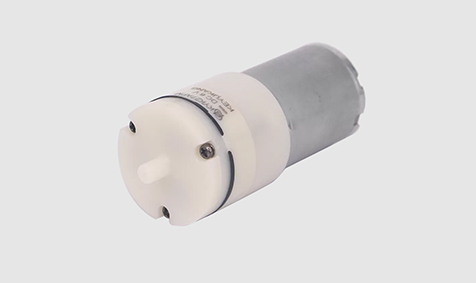
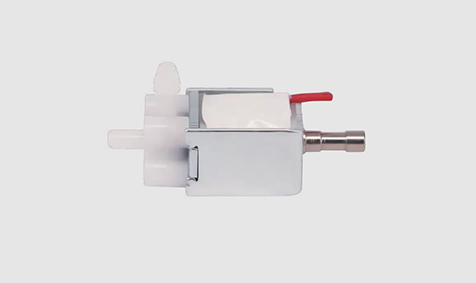
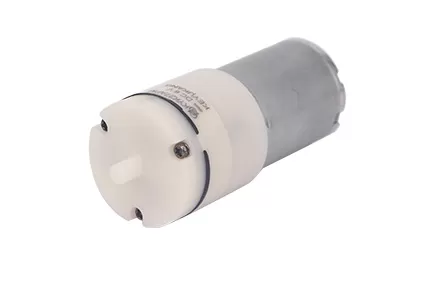
Modern beauty devices rely on controlled suction for pore cleansing, micro-suction massage, and targeted skincare delivery. But strong suction is not the goal — stable suction is. A well-selected tiny vacuum pump maintains consistent vacuum pressure across different skin contact conditions, improving user comfort, repeatable performance, and device safety. This guide explains what stability means, how a miniature vacuum pump system is engineered for control, and what to verify before integrating a pump into an aesthetics device.
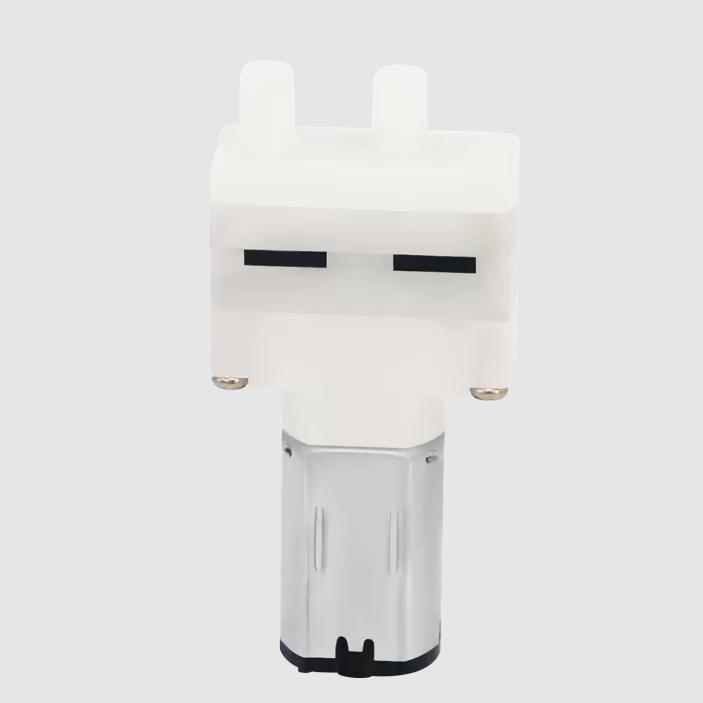
A user holding a pore-cleansing device to their skin should feel a steady, consistent suction. What they actually feel when a pump system is poorly controlled is different:
| Instability Type | User Experience | Root Cause |
|---|---|---|
| Pulsing suction | Rhythmic on-off sensation; feels mechanical and uncomfortable | Pump operating without smoothing or control feedback |
| Suction spikes | Sudden increase in pull; potential skin bruising risk | No pressure limiting; seal changes causing momentary vacuum surge |
| Gradual weakening | Treatment feels less effective as use continues | Filter clogging; motor thermal derating; battery voltage drop |
| Inconsistent cycle-to-cycle | Different results each use; user cannot build a routine | Thermal variation; non-regulated motor speed |
The vacuum load in a beauty device changes constantly during use:
Skin seals imperfectly and the seal quality varies as the device moves across the face
Debris and oils accumulate on the filter, increasing flow resistance
Tubing bends or kinks depending on user grip and device orientation
Battery voltage drops as the charge depletes, changing motor speed
A pump that is "powerful" in a test lab under ideal conditions will produce variable, uncomfortable suction under these real-world conditions without a control system designed to compensate.
Stability does not come from pump specification alone — it comes from a complete pneumatic system designed to regulate pressure around a target setpoint.
| System Element | Function | Effect on Stability |
|---|---|---|
| Miniature vacuum pump | Creates negative pressure by moving air | The primary pressure generation element |
| Pressure sensor | Measures actual vacuum level in the circuit | Provides feedback signal for the control loop |
| PWM motor controller | Adjusts pump motor speed based on sensor feedback | Compensates for load changes to maintain setpoint |
| Flow restrictor | Limits maximum flow to stabilize the vacuum envelope | Reduces the rate of pressure change during seal transitions |
| Check valve | Prevents backflow when pump is off | Maintains vacuum level during brief pump pauses |
| Filter with known flow resistance | Provides predictable pressure drop | Allows the control system to compensate consistently |
A tiny vacuum pump selected purely on maximum vacuum or flow rate specifications will not deliver stable performance without the surrounding system. The engineering effort is in the circuit design, sensor placement, and control algorithm — not just pump selection. Buyers who specify only "maximum vacuum depth" are specifying the wrong parameter.
| Specification | What to Define | Typical Range for Beauty Devices |
|---|---|---|
| Target vacuum range | kPa below atmospheric — the working setpoint range | 10–40 kPa typical for facial suction devices |
| Maximum vacuum | kPa at no-flow — the deepest vacuum the system reaches | Must not cause bruising; define the safety limit |
| Flow rate | L/min at working vacuum — must overcome filter and tubing resistance | 0.5–3 L/min depending on treatment head size |
| Response time | Time from start to reach working vacuum setpoint | Under 3 seconds preferred for user experience |
| Duty cycle | Continuous vs. intermittent; session length at rated load | Consumer beauty devices typically run 1–20 minute sessions |
| Constraint | Typical Limit | Impact on Pump Selection |
|---|---|---|
| Noise level | Below 45 dB(A) at 0.5 m for handheld use | Limits motor RPM and housing resonance; requires acoustic isolation |
| Vibration | Minimal perceptible vibration at skin contact | Requires vibration-isolated mounting within the device |
| Heat | Surface temperature of device below 43°C in use | Limits continuous run time; drives heat dissipation design |
| Size and weight | Fits within the device envelope; not too heavy for handheld use | Limits motor size; drives towards brushless micro pump formats |
Brushless motor designs offer longer service life and lower electromagnetic interference than brushed equivalents — preferred for premium devices
Define cycle life in expected uses per day and product service life in years to confirm the pump manufacturer's rated lifecycle covers the application
Confirm the pump can tolerate partial-clog conditions without stalling or motor damage
Beauty device operating environments are hostile to unprotected pump internals. Makeup residues, facial oils, moisturizer, and microscopic skin debris are all present at the treatment head. Without protection:
| Contaminant | Effect on Pump | Consequence |
|---|---|---|
| Skin oils and makeup | Coats internal pump diaphragm and valves; changes flow resistance | Performance drift; inconsistent vacuum over time |
| Liquid droplets from skin | Can reach pump diaphragm if liquid trap is absent | Pump damage; shortened service life |
| Fine debris particles | Accumulate on pump inlet filter | Progressive flow restriction; eventual clog |
| Protection Element | Function | Maintenance Requirement |
|---|---|---|
| Replaceable inlet filter | Captures particles before pump inlet | Replace on schedule or when visual indicator shows loading |
| Liquid trap/separator | Collects any liquid that enters the suction path before reaching the pump | Drain or replace per session or on schedule |
| One-way check valve | Prevents backflow of contaminated air toward pump when device is not running | Inspect periodically; replace if seal condition deteriorates |
| Moisture-resistant tubing | Tolerate condensation without degradation | Confirm material specification with pump supplier |
The most important maintenance design decision is making filter replacement obvious and accessible. A filter that is difficult to replace will not be replaced on schedule — and performance will drift until the user perceives the device as defective and requests a return.
Design principles that support good maintenance:
Filter element visible from the exterior or accessible with a simple tool-free step
Include a replacement filter in the product packaging so the first replacement is immediate and cost-free
Indicate replacement schedule in the user manual with a simple time or session count guideline
| Test | Method | Pass Criteria |
|---|---|---|
| Vacuum stability under variable skin loads | Simulate changing seal resistance from 0% to 80% seal area | Vacuum variation within ±15% of setpoint with closed-loop control |
| Clog simulation | Progressively restrict inlet filter; measure vacuum output | Alarm or compensation active before user-perceptible degradation |
| Long-run endurance | Operate at rated duty cycle for equivalent 2-year use | No performance degradation beyond defined threshold |
| Noise measurement | Measure at 0.5 m in anechoic conditions and in device housing | Meets defined dB(A) limit at rated operating vacuum |
| Battery voltage variation | Test at full charge and at 20% remaining | Vacuum level maintained within specification across voltage range |
| Drop and vibration | Device-level mechanical shock and vibration test | No pump mounting failure; no performance change post-test |
Calibrate pressure sensors on each device or on a defined sample from each production lot
Leak test the complete assembled pneumatic circuit before final device closure
Confirm filter installation on every unit — a missing filter can cause immediate pump contamination
Functional run test on every device: confirm vacuum setpoint is reached within the specified time
In aesthetics devices, precision is comfort — and comfort drives adoption and repeat purchase. A tiny vacuum pump that maintains stable vacuum pressure under real-world conditions delivers consistent treatment results, reduces user discomfort, and improves the product's long-term reliability in the field. Selecting the right miniature vacuum pump means defining vacuum and flow targets clearly, building the right protection circuit around the pump, and validating stability under realistic operating conditions before committing to production.
Q1: Why is stable vacuum pressure more important than maximum suction in beauty devices?
Users feel pressure changes immediately and physically. Stable suction creates a comfortable, repeatable treatment experience. Suction spikes can cause skin bruising or discomfort, and pulsing or weakening suction undermines confidence in the device. Maximum suction is a safety limit to define — stable suction at the working setpoint is the performance target.
Q2: What causes suction instability in beauty devices?
The most common causes are seal changes as the device moves across different skin surfaces, progressive filter clogging increasing flow resistance, tubing kinks or partial blockages from user handling, battery voltage drop reducing motor speed, and the absence of a closed-loop pressure control system to compensate for all these variables.
Q3: What specifications should I define when selecting a miniature vacuum pump?
Define the working vacuum setpoint in kPa, maximum vacuum safety limit, flow rate at working vacuum in L/min, response time to reach setpoint, duty cycle for your session length, noise level limit in dB(A) at operating distance, vibration tolerance, and whether the pump will be exposed to moisture, oils, or particulate contamination during normal use.
Q4: Do I need a pressure sensor in a tiny vacuum pump system?
If you need consistent, comfortable, repeatable suction across varying skin conditions and user sessions — yes. A pressure sensor connected to a PWM motor control loop compensates for all the real-world load variations that cause instability in open-loop systems. For premium beauty devices, this is not optional; it is the engineering that differentiates a professional-grade product from a commodity one.
Q5: How do I protect a tiny vacuum pump from makeup, oils, and moisture?
Install a replaceable particulate filter at the inlet to capture debris before it reaches the pump. Add a liquid trap between the treatment head and the pump to intercept any droplets. Use a one-way check valve to prevent backflow when the device is not running. Specify moisture-resistant materials for all tubing in the circuit. Design the filter replacement to be simple, tool-free, and obvious — so users actually do it on schedule.