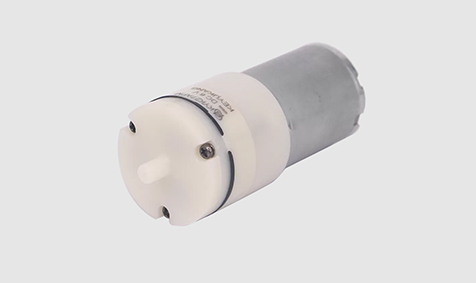
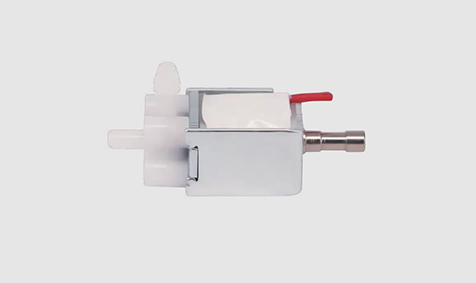
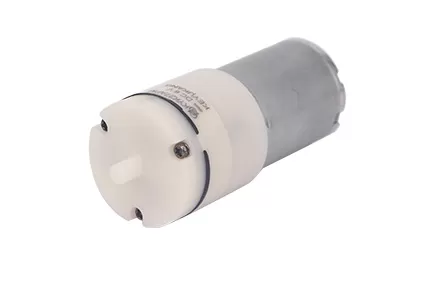
In premium appliances, noise is a brand signal. Customers may tolerate a loud motor in a budget product, but in 2026 quiet performance is one of the strongest differentiators for high-end air purifiers, coffee machines, vacuum storage devices, and smart kitchen appliances. The right mini pump can deliver stable flow or vacuum while staying quiet, compact, and reliable across long duty cycles. This guide explains what drives pump noise, what specifications matter, and how to choose the right mini pump manufacturers for premium appliance projects.
The context in which premium appliances operate has changed. A coffee machine on a kitchen counter in an open-plan living space operates in a near-silence environment. An air purifier in a bedroom runs through the night. A smart kitchen appliance processes food during dinner conversation. In all of these scenarios, pump noise is not background — it is front and center in the user's perception of product quality.
| Application | Use Context | Noise Sensitivity |
|---|---|---|
| Air purifier | Bedroom; overnight operation | Very high — any audible pump noise generates complaints |
| Coffee machine | Open-plan kitchen; morning use | High — noise during brewing is directly associated with quality |
| Vacuum food storage | Kitchen counter; regular daily use | Moderate — short cycle but immediate user proximity |
| Water circulation (humidifier) | Living room; continuous operation | High — any change in noise level is immediately noticed |
| Beverage dispenser | Kitchen or bar; guest use | High — noise perception affects perceived product luxury |
An appliance with a noisy pump generates a specific and highly visible type of user complaint — "it's louder than I expected" is among the most common phrases in one-star reviews for appliances. These complaints are difficult to address after product launch because the noise is a function of the pump selection and integration decisions made during development.
Understanding where noise originates allows the design team to address it at the source rather than attempting to suppress symptoms.
| Noise Source | Mechanism | Design Response |
|---|---|---|
| Motor vibration | Rotor imbalance and bearing vibration transmit through the pump housing to the appliance structure | Balanced motor specification; precision bearings; vibration-isolated mounting |
| Diaphragm pulsation | Each pump cycle creates a discrete pressure pulse that propagates as sound through air and structure | Optimized diaphragm stiffness and stroke; muffler volume on outlet |
| Valve actuation | Check valves (intake and exhaust) create a mechanical click at each cycle | Low-mass valve disc; soft seating material; optimized valve geometry |
| Airflow turbulence | High-velocity air through constricted passages creates aerodynamic noise | Smooth internal flow path; gradual transitions; intake filter/diffuser |
A pump that measures 35 dB(A) in isolation can appear at 45 dB(A) in a finished appliance if it is rigidly mounted to a resonant plastic housing. The housing acts as a sounding board that amplifies specific frequency components from the pump. This is why the acoustic performance of a mini pump must be validated in the actual appliance installation, not only on the pump test bench.
The system contributors to noise:
Housing resonance: thin plastic panels resonate at the pump's pulsation frequency
Tubing transmission: rigid tubing connected between the pump and the product pathway conducts vibration efficiently
Proximity to hard surfaces: a pump mounted against a hard panel radiates sound effectively from that surface
| Specification | What to Define | Common Range for Home Appliances |
|---|---|---|
| Flow rate | Volume per minute at the operating pressure | 0.5–5 L/min for most home appliance pumps |
| Maximum pressure | Gauge pressure against a closed outlet | 20–200 kPa depending on application |
| Maximum vacuum | Depression below atmospheric | 20–80 kPa for vacuum storage; lower for gentle applications |
| Operating voltage | DC voltage from the appliance power system | 3.7V, 5V, 12V, 24V — match to the product's power architecture |
| Duty cycle | Percentage of time the pump is running continuously | Define both the continuous rating and the intermittent cycle pattern |
| Service life | Required operational cycles or hours | Defines whether the pump's rated cycle life is adequate |
A mini pump running continuously at high load generates heat. If the pump body temperature exceeds the rated limit — which is often determined by the motor winding insulation class and the diaphragm elastomer temperature rating — performance degrades and service life shortens.
For appliances with longer duty cycles (air purifiers running hours at a time, recirculating beverage systems), confirm:
The pump's continuous rated current draw at operating load
The expected surface temperature at that load in the appliance's thermal environment
Whether forced cooling is required or whether natural convection is sufficient
The materials in the mini pump's wetted or air-path components directly affect the product's safety and sensory experience.
| Component Zone | Material Consideration | Premium Application Requirement |
|---|---|---|
| Air path (purifier, vacuum) | Any outgassing from plastic or rubber enters the living space | Low-VOC materials; odor-neutral after thermal cycling |
| Water contact (dispensers, humidifiers) | Materials must not leach into water or support microbial growth | Food-contact-grade or NSF-compliant materials |
| Diaphragm elastomer | Must be chemically compatible with the pumped medium; must not impart taste or odor | EPDM or PTFE-coated options for food and water contact |
| Housings and tubing | Chemical resistance to cleaning agents; dimensional stability | Specified material grade with known regulatory status |
Mini pump suppliers supplying premium appliances must demonstrate more than adequate average performance — they must demonstrate consistency across every unit in a production batch.
| QC Element | What It Ensures |
|---|---|
| 100% flow and pressure test | Every unit performs within specification; no statistical sample risk |
| Leak test on completed assembly | No air or fluid leakage through body, fittings, or diaphragm |
| Noise screening (if critical) | Units above the noise threshold are detected and separated |
| Batch traceability | Each unit can be linked to its production batch, materials, and test data |
| Retention samples | A sample from each batch is retained for investigation if a field issue emerges |
The acoustic performance of the finished appliance is largely determined by how the pump is mounted and connected to the product structure.
| Integration Element | Noise Reduction Mechanism | Implementation |
|---|---|---|
| Rubber isolation mounts | Prevent vibration transmission from pump to housing | Shore A 30–50 rubber; mount at pump's natural decoupling points |
| Flexible tubing connections | Prevent vibration conduction through the fluid path | Flexible silicone or PTFE-lined hose; no rigid pipe directly from pump |
| Muffler volume on outlet | Attenuates pulsation pressure waves | Dead-end volume or expansion chamber before outlet |
| Anti-resonance brackets | Prevent housing panel resonance at pump frequency | Stiffening ribs or damping tape on panel zones adjacent to pump |
| Spatial separation | Reduce noise transmission path to the user | Position pump away from the user-facing surface where possible |
| Test | Method | Acceptance Criterion |
|---|---|---|
| Noise level | Free-field measurement at 1 m; A-weighted | Below the specified dB(A) limit for the product category |
| Vibration | Accelerometer on the housing surface at pump frequency | Below defined surface vibration limit |
| Endurance run | Continuous or cycling operation for rated service life hours | No performance degradation; no noise increase above defined threshold |
| Temperature rise | Thermocouple at pump body and housing during endurance | Surface temperature within rated limits |
| Leak test on integrated assembly | Pressure decay on the complete fluid circuit | No measurable leakage across the test duration |
Golden sample retention: approve one physical sample that serves as the reference for noise, performance, and appearance — kept by both the buyer and the supplier
Incoming QC plan: define which tests are conducted on arrival and what the accept/reject criteria are
Replacement parts and after-sales: confirm the supplier can provide replacement units or service kits for the product's warranty period
Quiet performance is no longer optional in premium appliances — it is a category expectation that directly drives reviews, return rates, and brand perception. A correctly specified and properly integrated low-noise mini pump improves user experience across every use moment: morning coffee, overnight air purification, and kitchen food storage. Choosing experienced mini pump manufacturers who can deliver consistent performance, low-VOC materials, and complete test data is the most effective way to deliver a premium-grade product that lives up to its positioning.
Q1: What makes a mini pump qualify as "low-noise"?
Low-noise performance comes from controlling all four primary noise sources simultaneously: motor vibration (through balanced rotor and precision bearings), diaphragm pulsation (through optimized stroke and outlet muffling), valve actuation noise (through low-mass valve disc and soft seating), and airflow turbulence (through smooth internal flow paths). In the finished appliance, vibration isolation mounting and flexible tubing connections are equally important — a well-designed pump mounted rigidly on a resonant housing will still produce unacceptable noise.
Q2: How do I write a complete specification for a mini pump in a premium appliance?
Define: the pumped medium (air, water, or specific liquid), required flow rate at the operating pressure or vacuum, maximum pressure or vacuum rating, supply voltage, maximum continuous current draw, duty cycle (percentage of time operating and cycling pattern), required service life in hours or operational cycles, operating temperature range, noise limit in dB(A) at a specified measurement distance, and any material or regulatory requirements for the medium in contact.
Q3: Can the installation method affect noise as much as the pump specification?
Yes — often more. A pump with excellent inherent noise performance that is rigidly bolted to a thin plastic panel will excite panel resonances and radiate significantly more sound than the same pump isolated on rubber mounts. The mounting system is as important as the pump specification for the acoustic performance of the finished appliance, which is why acoustic validation must always be conducted in the actual appliance integration, not only on the pump in isolation.
Q4: What endurance and reliability tests should I conduct before approving a mini pump for mass production?
The minimum test suite should include: a full-cycle endurance test at rated duty cycle and operating load for the expected service life hours; noise measurement at beginning, middle, and end of the endurance run to detect noise increase from wear; temperature rise measurement to confirm thermal performance within rated limits; pressure and flow measurement before and after endurance to confirm no performance degradation; and a leak test on the complete integrated assembly.
Q5: What should I ask mini pump manufacturers before placing a production order?
Ask for the performance curve (flow versus pressure across the operating range), noise measurement data with the test method and conditions specified, duty cycle and rated service life, material specifications for all wetted or air-path components, quality control process including whether 100% performance testing is conducted, batch traceability practices, available noise reduction options (isolation mounts, mufflers, mount configurations), lead time, and the replacement parts and after-sales support program.